
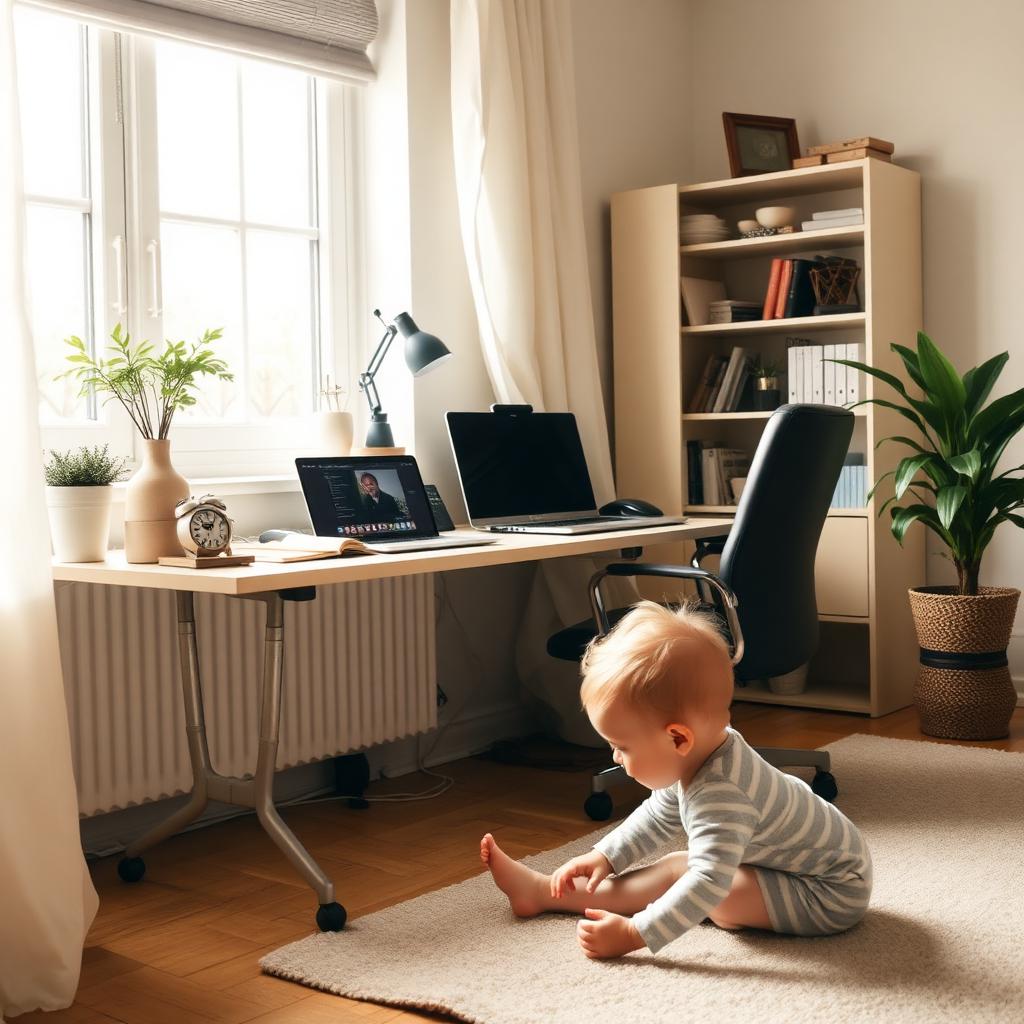
Here's the truth every remote-working parent learns: you cannot do focused work and active toddler care simultaneously — you can only alternate badly at both. The sustainable setup is part-day childcare that protects your core work blocks, with drop-in hours for meeting-heavy days. Here's why juggling fails, and how to build the split.
Why the juggle fails (it's not you)
Toddlers interrupt on a 3–10 minute cycle; deep work requires 60–90 unbroken minutes. Naps provide one usable block that shrinks as your child grows and dies entirely around age three. The result of "I'll just work while they play" is fractured output, guilt in both directions, a child parked in front of screens more than you'd like, and workdays that leak into evenings. Remote work removed the commute — it did not remove the need for childcare.
The part-day structure that works
Match care to your cognitive peak, not your whole workday. Common patterns: morning blocks (8:30–1) for deep work, with admin and email during afternoon nap/quiet time; or three full days of care for meeting-and-sprint days with two light home days. At Recess, custom schedules are built at exactly this granularity — any days, any hours, month-to-month — and every schedule includes free FlexCare membership so a surprise all-hands or deadline becomes a drop-in booking rather than a crisis. Hybrid workers: see rotating & hybrid schedules.
The math remote parents avoid doing
Count your genuinely productive hours in a juggled week — most WFH parents find 12–18, extracted painfully. Twenty hours of part-day care converts to ~20 clean work hours, often letting you end at 5 instead of finishing decks at 10pm. Price 20 hourly-billed hours in the Recess calculator, weigh it against your hourly earnings and evening sanity, and remember the tax credit/FSA applies to work-enabling care for remote workers exactly as for commuters.
What your toddler gets out of it
This isn't just your upgrade. A few structured part-day sessions weekly give toddlers what a home office can't: peers, circle time, art that's someone else's mess, outdoor play, and caregivers whose entire attention is the room. Recess keeps rooms small (max 12 children, 2+ adults) and screen-free — arguably less screen time than a distracted-parent day at home. For gradual starters, ease in with drop-ins.
Start with a trial block
Run the experiment: book the free trial session (up to 4 hours), schedule your gnarliest project into that window, and compare output to a juggled morning. Most parents don't need a second data point. Enroll here.