
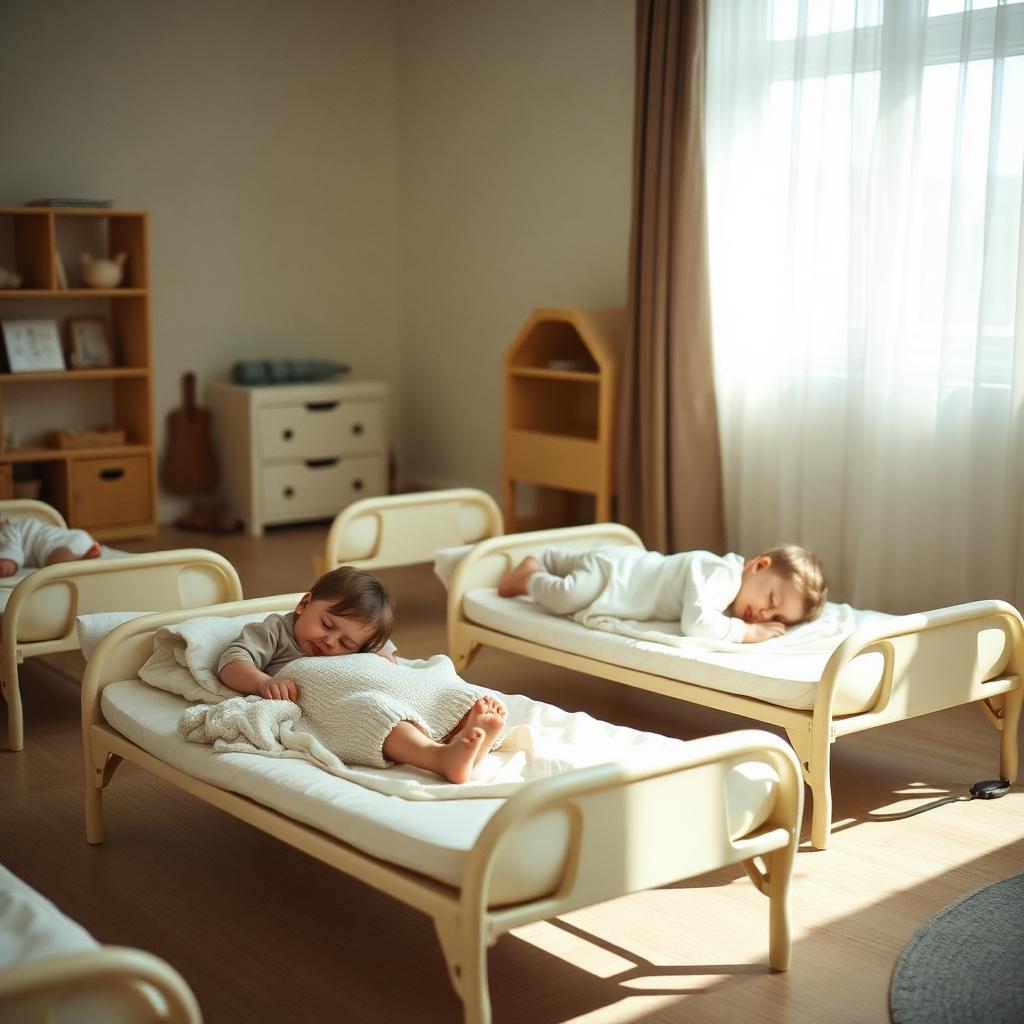
In licensed care, infants nap on their own schedules in safe-sleep cribs, while toddlers and preschoolers move to a single early-afternoon group nap — typically 12:30–2:30 — with quiet-time alternatives for non-sleepers. Most kids nap better at daycare than parents expect (peer effect is real). Here's how it works by age and how to keep home sleep in sync.
Infants: their schedule, not the room's
Pennsylvania licensing and AAP safe-sleep standards govern infant naps: babies sleep on their backs, in individual cribs, with bare sleep surfaces — sleep sacks yes, loose blankets no. Good programs follow each baby's cues rather than imposing a room schedule, tracking sleep and sharing it with parents (Recess sends updates through the parent app). Share your baby's current rhythm and soothing preferences at enrollment; consistency between home and care smooths everything.
Toddlers: converging on the one big nap
Most children consolidate to one afternoon nap between 12 and 18 months, and group care actually helps: the room's rhythm — lunch, wind-down, lights dim, soft music, cots out — cues sleep powerfully, and the sight of eight other toddlers lying down is peer pressure in its finest form. Typical structure: lunch around noon, nap ~12:30–2:30 on individual cots with home-provided linens (see the packing list). Kids who resist napping at home routinely sleep at daycare; enjoy the mystery.
Preschoolers and the end of naps
Nap needs diverge at 3–5: some children need the full sleep, others are transitioning out. Quality programs run rest/quiet time — every child on a cot with books or quiet activities after a rest period — honoring both sleepers and non-sleepers without chaos. If late-day naps are wrecking your child's bedtime, ask about shortening or capping their nap; good providers work with families on this individually.
Syncing home and daycare sleep
Keep wake time, nap window, and bedtime roughly consistent across all seven days — wildly different weekend sleep makes Mondays hard. Tell caregivers about changes (dropped naps, new sleep associations, teething weeks) and ask what they observe; they have excellent comparative data. After daycare days expect earlier bedtime needs at first — group days are gloriously tiring. For calm, screen-free environments where wind-down actually works, room design matters: Recess's spaces are deliberately calm and low-stimulation, which shows up most at nap time.
Flexible schedules and naps
Booking drop-in hours? For children who nap, either keep visits clear of the nap window or span it fully (drop-offs mid-nap-window are the one timing to avoid). Recess caregivers will slot your child into the room's rest rhythm on any schedule — mention nap status when you book.